
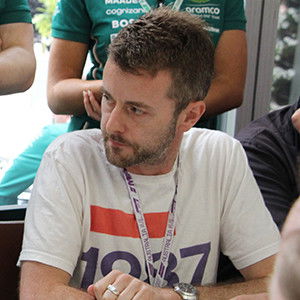

Speaking on the latest episode of the KTM Summer Grill, Illman said the paddock was far less crowded when he first entered the sport in 2017, with increased fan access and social media interest significantly altering the working environment for photographers and media.
“The paddock was a lot less populated when I started,” Illman said.
“These days, on a Saturday or Sunday, it’s very tough to get a clean shot of a driver because there are so many selfie hunters and autograph hunters.”
Illman believes the shift has been driven by Formula 1’s decision to open the sport to fans, combined with the global popularity of Netflix’s Drive to Survive, which has fuelled unprecedented interest in behind-the-scenes content.
Operating independently of teams and broadcasters, Illman has built a large following by focusing on moments that do not appear in race coverage, including interactions in car parks, paddock walk-ins, and areas around the FIA garages.
“Almost everybody talking about Formula 1 on social media is watching the same TV feed,” he said.
Click here to find out how.
“I don’t do anything you’ve already seen on television. I give people the stuff nobody shows.”
Illman said understanding what audiences respond to, and maintaining trust within the paddock, is critical to sustaining access in the modern Formula 1 environment.
That approach draws on his experience before F1.
Illman built a successful business career as the founder of Messages on Hold, an Australian audio branding company, and also enjoyed a brief motorsport career before focusing on photography and digital content full-time.
Access in the modern paddock also depends heavily on unwritten rules, he said, with relationships between photographers, drivers, and teams tightly managed.
“If a driver or their partner asks me to take something down, I do,” Illman said.
“If a team says something isn’t correct, I’ll correct it.
“If you’re constantly negative, you won’t last very long in the paddock.”
Illman said his social media strategy reflects that balance.
He posts content audiences want to see, rather than simply what happens on track, and focuses on positive, behind-the-scenes moments rather than standard race coverage.
“Give people what they want,” he said. “If I put car photos up all the time, I get no traction.
“You can’t force people to be interested in something they’re not.”
While social media has created new opportunities for independent creators, Illman said replicating his model would be difficult due to the workload and the level of access required.
“No one else really does what I do,” he said.
“It’s incredibly hard work, and if you get it wrong, the access disappears pretty quickly.”
As Formula 1 continues to grow, Illman said access is likely to become more restricted rather than more open, placing greater importance on trust, experience, and discretion for those working inside the paddock.




















Discussion about this post